

EV Charging That Makes Parking Assets Work Harder
A row of chargers beside an existing parking lot can look like a straightforward amenity. For a commercial property, fleet depot, campus, or municipal site, EV charging is a far more consequential decision. It affects electrical capacity, peak-demand costs, vehicle circulation, tenant and employee experience, future capital planning, and the value produced by every square foot of paved area.
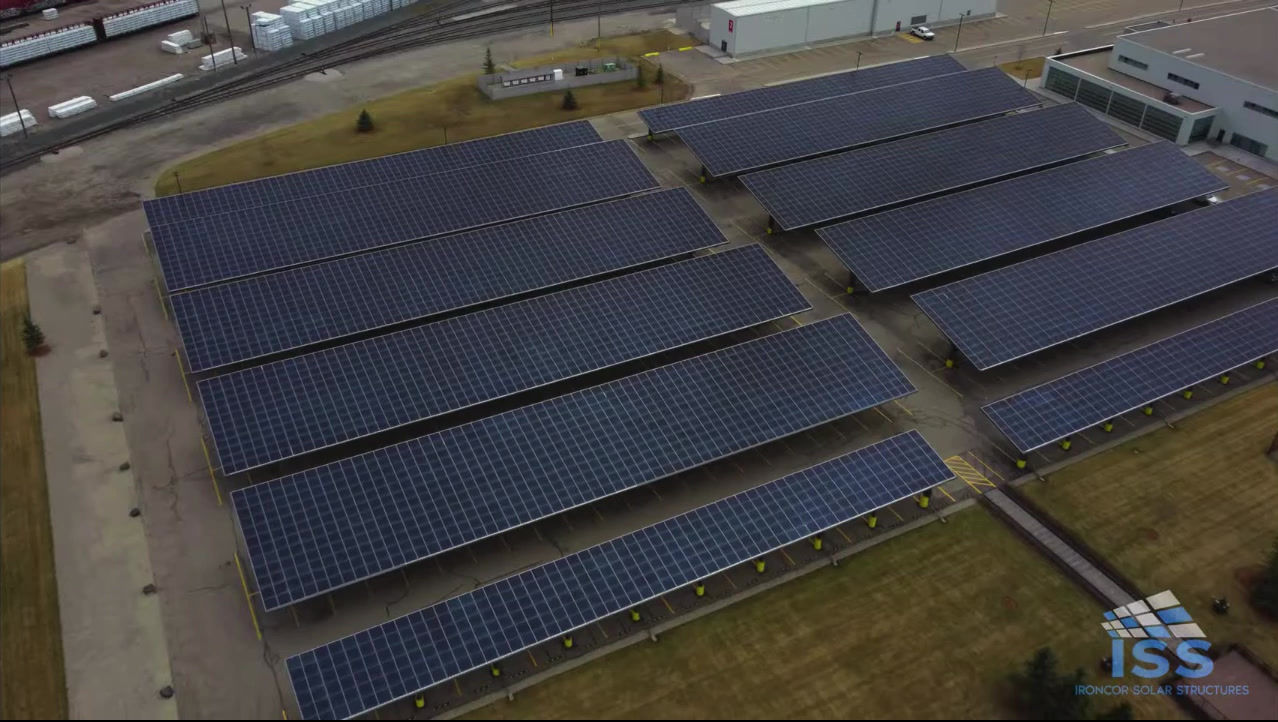
The strongest projects do not treat charging as a stand-alone equipment purchase. They treat it as part of an energy and parking strategy. When paired with solar carports, charging infrastructure can help an organization generate power where vehicles already dwell, protect those vehicles from weather, and put underused parking assets to work.
EV Charging Is a Parking Infrastructure Decision
Commercial charging demand rarely arrives all at once. It develops through employee adoption, fleet electrification, tenant expectations, customer traffic, and public policy. The challenge is that electrical infrastructure must often be sized and constructed before usage reaches its full potential.
That creates a familiar planning tension. Build only for immediate demand, and a property may face disruptive and costly upgrades later. Build too much capacity too early, and capital sits underutilized. The practical answer is a phased plan that establishes the right electrical backbone, civil layout, and structural allowances from the start while deploying chargers in line with actual demand.
Parking areas are especially well suited to this approach because they concentrate vehicles, electrical demand, and available solar exposure in the same place. A solar carport can provide the canopy structure, support solar generation, and create a logical, visible location for charging equipment. Rather than consuming valuable building roof space or requiring a separate energy project, the parking lot becomes an operating asset.
For organizations with large vehicle populations, this also changes the conversation from amenity planning to operational planning. Fleet managers can schedule charging around routes and dwell time. Facilities teams can manage demand more deliberately. Sustainability leaders can connect transportation electrification to measurable on-site generation and emissions-reduction goals.
Start With How Vehicles Actually Use the Site
The appropriate charging mix depends less on a generic charger count than on vehicle behavior. A workplace where vehicles remain parked for eight hours has different needs than a retail location with short visits. A delivery fleet returning overnight has different requirements than a university campus serving faculty, staff, students, and visitors.
Level 2 charging is often a strong fit where dwell times are predictable and several vehicles need access over the course of a day. It can support workplace, destination, and overnight fleet charging without imposing the same electrical demand as fast charging. DC fast charging may be appropriate for high-turnover locations, time-sensitive fleets, or routes where rapid replenishment is essential. It also requires more careful analysis of utility capacity, demand charges, transformer needs, and site economics.
A good early assessment should map more than parking stalls. It should identify arrival and departure patterns, daily mileage, vehicle classes, expected adoption rates, available utility service, site load profile, and operational constraints. It should also account for accessible parking, snow clearing, traffic flow, cable management, lighting, security, and maintenance access.
The objective is not simply to install the most chargers. It is to provide enough reliable charging capacity for the job, in locations drivers can use easily, without creating avoidable electrical or construction costs.
Design for Electrical Capacity, Not Just Chargers
A charger is the visible part of the project. The electrical distribution system determines whether that charger can perform economically at scale.
Many properties have sufficient service for a small initial installation but not for a full electrification plan. The gap may involve switchgear, transformers, feeder capacity, utility interconnection, or demand-management controls. These conditions should be understood before equipment is selected, not discovered after the parking lot has been excavated.
Load management can play a central role. Intelligent charging controls can allocate available power among connected vehicles, reduce coincident peaks, and prioritize critical fleet assets. This may allow an organization to serve more vehicles from existing infrastructure than a simple nameplate calculation suggests. It is not a substitute for capacity where substantial growth is planned, but it can improve capital efficiency and defer certain upgrades.
Solar generation adds another valuable layer. Solar carports generate electricity during daylight hours, often when commercial facilities are operating and parking areas are occupied. Depending on local rates, utility rules, site load, charging behavior, and system size, that energy can offset a portion of facility consumption and charging demand. The financial case should be modeled conservatively, with attention to production profiles, seasonal variation, utility tariffs, incentives, and the timing of energy use.
Solar does not eliminate the need for grid power, particularly for overnight charging or high-power fast charging. It can, however, reduce purchased electricity, diversify the property's energy supply, and improve the return profile of both the solar structure and charging investment.
Solar Carports Create More Value From the Same Footprint
A conventional parking lot is a necessary cost center. A solar carport can change its role by combining weather protection, on-site generation, charging readiness, and a visible commitment to efficient infrastructure.
The shelter benefit is practical. Vehicles, equipment, and charging stations are exposed to snow, hail, rain, heat, and ultraviolet radiation. Canopy coverage can improve driver comfort, reduce heat buildup in parked vehicles, and help protect assets from weather-related wear. For fleet operations, covered staging and charging areas can support more consistent daily routines in difficult conditions.
The structural design also matters. Charger locations, conduit runs, solar panel orientation, drainage, clearance heights, snow loads, wind loads, fire access, and vehicle movement must work as one coordinated system. Retrofitting separate systems in sequence can create conflicts that add cost or compromise the final layout.
This is why early coordination between energy, civil, electrical, and structural teams is valuable. An integrated project can reserve conduit pathways, position equipment efficiently, and support phased charger additions without repeatedly disturbing finished pavement. It also gives owners a clearer view of total project costs rather than a series of disconnected upgrades.
Sunport Structures approaches solar carports as commercial infrastructure, combining tailored engineering, installation, and financing options to help parking areas deliver energy, protection, and long-term operating value.
Build a Business Case Around Operating Outcomes
The business case for EV charging should include more than charger revenue. In some settings, direct charging revenue is meaningful. In others, the better return comes from supporting fleet conversion, attracting tenants, retaining employees, meeting institutional commitments, or avoiding future site constraints.
For a fleet operator, the primary value may be fuel-cost reduction and better control over vehicle availability. For a multi-tenant property, charging may strengthen leasing appeal and help preserve competitiveness as tenant requirements change. For a municipality or campus, the investment may support public access, service continuity, climate targets, and leadership in the community.
Costs should be evaluated across the full project lifecycle. That includes equipment, utility upgrades, trenching, foundations, electrical distribution, communications, payment systems, maintenance, warranty coverage, and eventual expansion. It also includes the value of solar production, available incentives, depreciation treatment, and avoided energy costs where applicable.
There is no universal payback period because utility tariffs, local construction conditions, use patterns, and incentive programs vary widely. A disciplined model should test multiple adoption and utilization scenarios. Decision-makers need to know how the project performs if charging demand grows slowly, if demand charges are higher than expected, or if fleet electrification accelerates faster than planned.
Choose a Delivery Model That Reduces Handoffs
Charging and solar-carport projects can involve utilities, civil contractors, electricians, structural engineers, solar specialists, equipment providers, permitting authorities, and financing partners. Each handoff introduces schedule and accountability risk.
A coordinated delivery model gives property owners a clearer path from concept through commissioning. It allows site conditions, utility requirements, structural design, solar production, and charging capacity to be assessed together. It also supports decisions about phasing before construction begins, when they are least expensive to make.
Quality should remain central. Commercial sites need structures and electrical systems designed for local codes, climate conditions, long-term maintenance, and safe daily use. Owners should expect clear engineering assumptions, realistic schedules, defined scopes, and a plan for service after installation. The lowest initial price is not always the lowest ownership cost if it leads to premature upgrades, poor vehicle access, or fragmented responsibility.
The most valuable EV charging projects are built around how a property operates now and how it will operate five or ten years from now. When parking, power, solar generation, and charging are planned as one system, the result is not just a place to plug in. It is infrastructure that can lower operating costs, protect valuable assets, and give the property a more productive role in its energy future.


