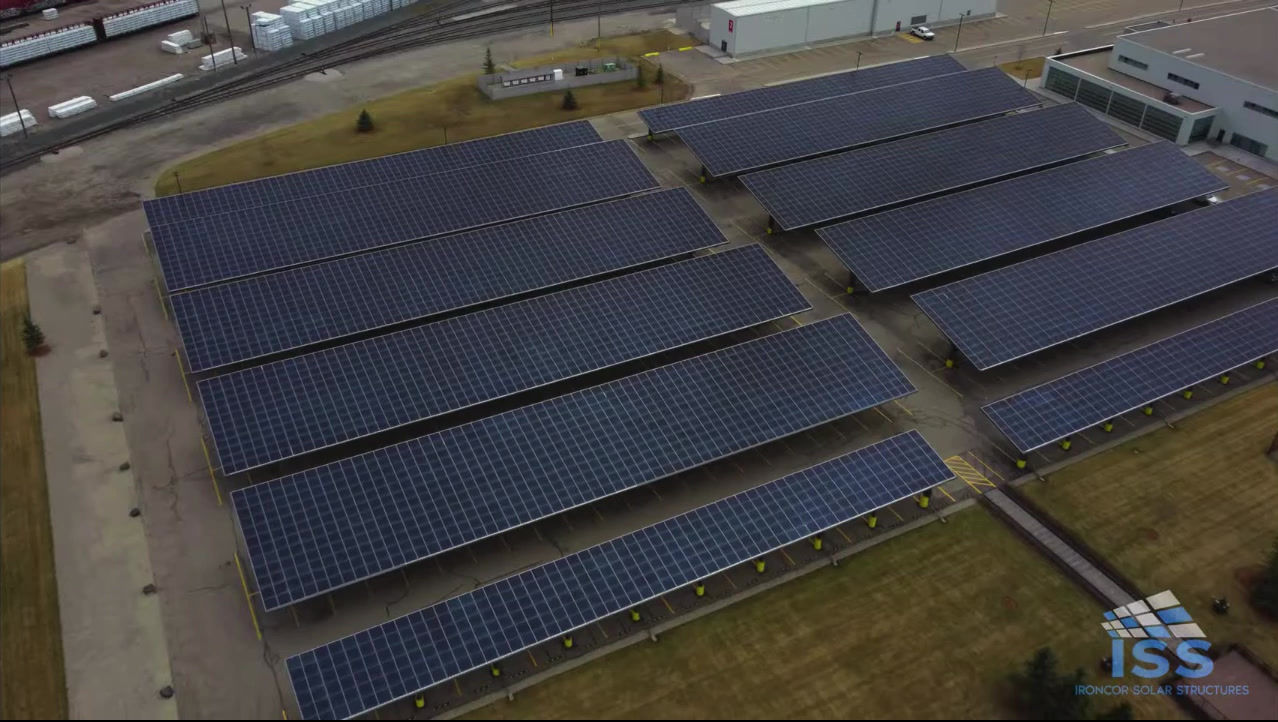


Energy Resilience Starts in the Parking Lot
A utility interruption can turn an ordinary parking lot into a business continuity problem. Vehicles cannot charge, critical equipment loses access to power, employees and visitors face disruption, and operating costs become less predictable. Energy resilience gives commercial property owners a practical way to reduce that exposure by producing electricity where it is used, then designing the site to keep serving its operational purpose.
For organizations with large parking areas, the opportunity is often already underfoot. Solar carports can convert open asphalt into productive infrastructure: a source of on-site generation, covered parking, a platform for EV charging, and a more flexible energy asset. The objective is not to claim independence from the grid at all times. It is to make the facility less vulnerable to volatile costs, constrained capacity, and interruptions that affect operations.
What Energy Resilience Means for Commercial Sites
Energy resilience is a site's ability to anticipate, withstand, and recover from energy-related disruptions while maintaining priority operations. Those disruptions may be short-term outages, extreme weather, utility curtailment, rising demand charges, fuel-price swings, or delayed access to additional grid capacity.
For a warehouse, the priority may be keeping fleet vehicles charged and maintaining security systems. For a municipality, it may be supporting public-facing services and emergency operations. For a hospital, campus, or large employer, it may include protecting essential loads while preserving access for staff, patients, students, and visitors. The right resilience plan depends on the site's operating profile, not a generic checklist.
On-site solar generation is one component of that plan. By itself, solar generally reduces the amount of electricity a facility purchases during daylight production hours. Paired with appropriately designed electrical infrastructure, battery storage, controls, and backup systems, it can also support selected loads when the grid is unavailable. The distinction matters: energy savings and outage capability are related, but they are not the same outcome.
Start With the Loads That Cannot Wait
Resilience planning becomes more useful when a facility identifies what must remain powered first. This can include security lighting, communications, refrigeration, access controls, building automation, pumps, dispatch systems, or EV charging for priority vehicles.
That exercise determines whether a project should focus on lowering utility consumption, reducing peak demand, maintaining limited critical operations during outages, or a combination of all three. It also prevents overbuilding. A site does not need to back up every circuit to gain meaningful operational protection.
Why Parking Areas Are a Strategic Energy Asset
Rooftops remain valuable solar locations, but they are not always the best fit. Roof condition, structural capacity, competing equipment, shading, lease restrictions, and future building plans can limit available space. Parking areas offer another path without consuming developable land or changing how the property is used.
A solar carport places generation close to the electrical loads it is intended to serve. It can also create a logical home for EV chargers, particularly where an organization is electrifying fleet vehicles or preparing for employee and visitor charging. Instead of treating charging as a stand-alone amenity that adds pressure to the utility service, the site can be engineered as an integrated energy system.
The structure delivers value even when the panels are not producing at full output. Covered parking protects vehicles, equipment, and people from sun, rain, snow, and hail. For fleet operators, that protection can improve driver comfort, support vehicle readiness, and reduce exposure to weather-related wear. For property owners, it can differentiate a site while putting existing pavement to more productive use.
Solar Carports Improve Resilience, but Design Determines Results
Not every solar carport produces the same commercial outcome. Orientation, row spacing, structural configuration, electrical interconnection, local weather conditions, and the site's load profile all affect generation and economics. A project should be designed around the property rather than forced into a standard layout.
The electrical strategy requires equal attention. If the goal is lower utility costs, the system must be sized and interconnected to complement the facility's daytime consumption and applicable utility rules. If the goal includes outage support, the design may require energy storage, transfer equipment, critical-load panels, and controls that safely isolate designated circuits from the grid when necessary.
Solar modules alone do not keep a building energized during an outage. Most grid-connected systems are required to shut down when utility power fails unless they are designed with the equipment and operating logic needed for islanded or backup operation. Commercial buyers should ask this question early, before budgets and expectations are set: which loads need to operate, for how long, and under what conditions?
EV Charging Needs a Managed Approach
EV charging can strengthen a resilience strategy, especially for organizations that depend on electric fleets. It can also become a major new electrical load. The answer is not simply to install the maximum number of chargers at the highest available power.
Load management can allocate available capacity across vehicles based on fleet schedules, state of charge, and operational priority. Solar generation can help offset charging demand during the day, while storage may reduce peak imports or provide limited backup capability. The best approach depends on vehicle dwell time, route requirements, utility tariffs, and whether charging must continue during a grid interruption.
For a delivery fleet that returns overnight, charging capacity and timing may matter more than midday solar alignment. For a public facility with daytime parking, solar-supported visitor charging may be a stronger fit. A site assessment should account for both current needs and the electrical room to grow.
Evaluate the Business Case Beyond Panel Output
A solar structure should be evaluated as a long-life infrastructure investment, not only as an energy-production calculation. The return can include avoided electricity purchases, potential demand-charge management, covered parking value, improved EV readiness, and reduced exposure to future energy volatility.
There are trade-offs. A larger system may generate more energy but require a more complex utility interconnection. Battery storage can add outage capability and operational flexibility, but it must be justified by the value of critical loads, tariff savings, or other measurable benefits. Premium structural finishes or expanded canopy coverage may improve asset protection and user experience, while increasing project cost.
A disciplined assessment connects these decisions to financial and operational objectives. It should consider capital cost, financing options, expected production, utility rate structure, maintenance requirements, insurance considerations, construction phasing, and the useful life of the structure. It should also examine whether the project can be delivered without disrupting parking access, traffic flow, or daily operations.
A Better Delivery Model Reduces Project Risk
Commercial solar infrastructure sits at the intersection of civil planning, structural engineering, electrical design, utility coordination, construction, and finance. Fragmenting those responsibilities can create delays and gaps in accountability, particularly when a project includes custom steel, charging equipment, storage, or challenging site conditions.
An end-to-end delivery approach gives owners a clearer path from concept through commissioning. It begins with site evaluation and financial modeling, then moves into tailored structure design, engineering, manufacturing, permitting, installation, and system activation. That coordination matters because a decision about column placement can affect traffic patterns, drainage, accessible parking, snow management, electrical routing, and the amount of energy the asset can produce.
Sunport Structures approaches solar carports as commercial infrastructure built around the specific site, operating requirements, and investment case. For buyers, that means working toward one accountable plan rather than trying to reconcile separate structural, solar, and installation scopes after the fact.
Questions to Ask Before Investing in Energy Resilience
Before selecting a solution, property owners should establish a clear operating brief. Four questions often shape the project most effectively:
Which business functions, vehicles, or systems are essential during an outage?
What does the site's electricity demand look like by hour, season, and peak period?
How much parking area can be covered without compromising circulation, access, or future development?
Is the near-term priority cost reduction, fleet electrification, backup power, asset protection, or a measured combination?
The answers help determine whether the best first phase is solar carport generation, EV-ready structural and electrical infrastructure, battery storage, or a staged plan that preserves expansion options. A phased approach can be especially valuable for multi-property organizations that want to establish a repeatable model while responding to different utility conditions and site constraints.
Energy resilience is not achieved by adding technology for its own sake. It is built by making each infrastructure decision serve a defined operational purpose. For organizations with underused parking areas, the next practical step is to treat that space as part of the energy plan - and design it to deliver value long after the installation is complete.


