

Commercial Solar Canopy Guide for Smarter Parking
A large parking lot is often one of a property’s least productive assets. It absorbs heat, requires maintenance, and exposes vehicles, equipment, and visitors to weather. A commercial solar canopy guide starts with a different premise: parking can generate electricity, protect valuable assets, and create a practical foundation for EV charging without consuming additional developable land.
For commercial property owners, the decision is not simply whether solar energy is a good idea. The decision is whether a solar canopy can produce reliable financial and operational value under the site’s specific utility rates, parking demand, structural conditions, and capital plan. The strongest projects are designed around those realities from the start.
What a Commercial Solar Canopy Delivers
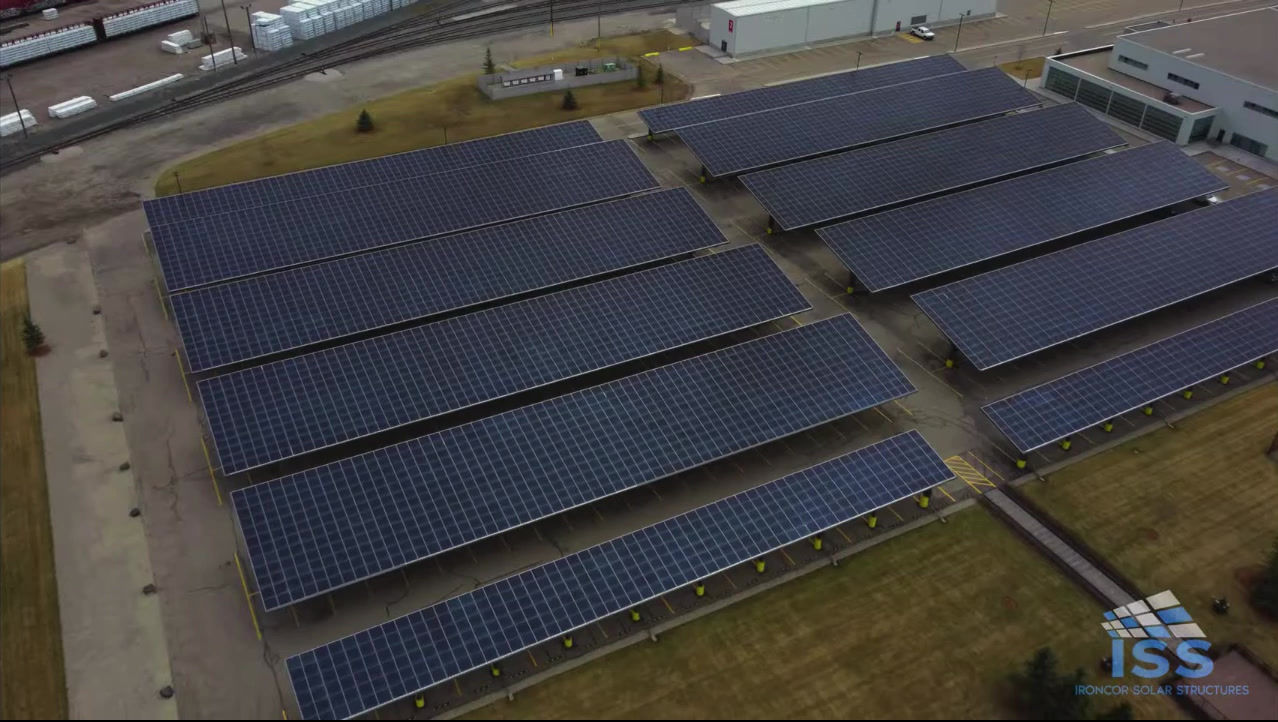
A solar canopy, often called a solar carport, is a steel structure that supports photovoltaic modules above parking stalls, fleet yards, drive lanes, or outdoor equipment areas. The structure creates shade and weather protection while generating on-site electricity for the host facility.
That combination matters because it changes the investment case. A rooftop solar project is limited by roof area, age, loading capacity, orientation, and future replacement schedules. Ground-mounted solar can require land that a commercial or institutional property cannot spare. Parking areas are already paved, accessible, and connected to the facilities they serve. A canopy turns that existing footprint into energy infrastructure.
The value extends beyond electricity production. Covered parking can reduce heat exposure for employee and customer vehicles, protect fleet assets from snow, rain, hail, and UV damage, and improve the daily experience of people using the site. For facilities with outdoor equipment, the protective value can be especially meaningful. These benefits may not appear as a single line item in an energy model, but they can strengthen the overall business case.
Start With the Site, Not the Structure
Every successful project begins with a site assessment. The parking count alone does not determine whether a canopy makes sense. Decision-makers should examine annual electricity consumption, interval demand data where available, utility tariff structure, electrical service capacity, parking circulation, snow and wind requirements, drainage, geotechnical conditions, and planned site improvements.
Energy consumption is central. Solar generation is most valuable when it offsets electricity that would otherwise be purchased at favorable retail rates. A facility with substantial daytime load, such as a distribution center, hospital, office campus, manufacturing plant, school, or retail property, may be well suited to on-site generation. A site with low daytime demand may still be viable, but the design, system size, and utility export rules require closer review.
Parking operations matter just as much. A canopy must preserve safe circulation for passenger vehicles, delivery vehicles, emergency access, snow removal, and maintenance. Clear heights, column locations, stall layouts, accessible parking requirements, and sightlines all influence the structural concept. Designing around real operating patterns avoids the expensive mistake of treating the parking lot as an empty rectangle.
Future plans should be considered early. If the property expects a building expansion, repaving program, fleet conversion, or electrical upgrade within the next several years, the canopy plan should align with that timing. Rework is costly. Coordinated capital planning is usually more efficient than adding each improvement independently.
Design Choices That Affect Returns
A commercial solar canopy is a long-life asset, not a commodity racking package. Structural design must account for local code requirements, wind, snow, seismic conditions where applicable, corrosion exposure, foundation conditions, and the electrical pathway from the array to the point of interconnection.
Single-row canopies often work well along parking perimeters or narrower lots. Double-row structures can cover more stalls with fewer columns and may improve structural efficiency across broad parking fields. Elevated structures can accommodate taller vehicles or equipment, though greater clearance can add steel, foundation, and installation cost. The right configuration depends on the site rather than a standard template.
Module orientation is also a trade-off. A south-facing configuration may maximize annual energy production in many locations, while east-west orientations can produce a flatter daily generation profile and make efficient use of parking geometry. Neither option is automatically superior. The preferred design should reflect electricity pricing, demand patterns, available footprint, and the project’s target economics.
Material quality and fabrication discipline deserve careful attention. Solar modules may be replaced or upgraded during the life of the structure, but the steel system, foundations, drainage approach, and cable management must support decades of operation. Commercial owners should evaluate the engineering basis, steel protection strategy, fabrication standards, connection details, and long-term maintainability before comparing initial price alone.
Pairing Canopies With EV Charging
Solar canopies and EV charging are complementary, but they are not interchangeable. The canopy produces electricity during daylight hours; chargers create a new and sometimes significant electrical load. A successful combined project evaluates both sides of that equation.
For employee, customer, or public charging, usage patterns can be variable. For fleets, charging schedules may be predictable but power requirements can be much larger. In either case, electrical capacity, load management, charger count, and anticipated vehicle adoption should guide the design. Installing conduit pathways and reserving electrical room capacity during canopy construction can be a cost-effective way to prepare for later charging expansion.
It is also important to avoid promising that a canopy will directly power every vehicle beneath it in real time. In most commercial systems, solar production serves the site’s broader electrical load through the facility’s electrical infrastructure. The financial value comes from coordinated energy use, utility billing, and system design, not from a one-panel-to-one-vehicle relationship.
Building a Clear Financial Case
The financial model should include more than projected annual kilowatt-hours. A credible evaluation considers installed cost, engineering, interconnection, electrical upgrades, site work, operations and maintenance, financing costs, applicable incentives, expected utility savings, and the useful life of the asset.
Demand charges deserve particular attention. In some utility territories, reducing energy consumption is only part of the opportunity. The system’s production profile, facility load, and load-management strategy can influence how much value the project captures. A detailed utility-bill analysis is more useful than a generic savings estimate.
Financing can determine whether a project moves forward. Some owners prefer to own the asset directly and capture its long-term energy value. Others prioritize preserving capital and may consider structured financing or third-party models. The best approach depends on balance-sheet priorities, tax position, risk tolerance, and the organization’s ability to use available incentives. Legal, tax, and financial advisors should validate assumptions before a final investment decision.
Property owners should also quantify non-energy benefits where they are material. Reduced vehicle exposure, improved tenant amenities, employee retention support, parking-area comfort, EV-readiness, and visible sustainability leadership can influence leasing, operational, and stakeholder outcomes. These benefits should not be exaggerated, but they should not be ignored simply because they are harder to model than electricity savings.
Delivery Risks to Resolve Before Construction
Commercial solar canopies involve several disciplines: civil work, foundations, structural steel, solar installation, electrical infrastructure, utility interconnection, permitting, and commissioning. Fragmenting these responsibilities across multiple vendors can create gaps in accountability, particularly when field conditions differ from early assumptions.
A qualified delivery partner should establish a clear scope from concept through commissioning. That includes confirming site data, completing engineering, coordinating permits and utility requirements, managing installation sequencing, and documenting the completed system. For occupied sites, the construction plan should also address traffic control, safety, business continuity, access restrictions, and phased installation.
Schedule risk often sits outside the physical construction itself. Utility studies, interconnection approvals, equipment lead times, permitting cycles, and electrical service upgrades can affect the project timeline. Address these items early rather than treating them as administrative details after the design is complete.
Sunport Structures approaches these projects as tailored commercial infrastructure, combining custom design, engineering, manufacturing, installation, and financing support so owners can evaluate one coordinated path from parking area to operating energy asset.
A Practical Decision Framework
Before requesting a formal proposal, property leaders should be able to answer four questions. What electricity load can the system offset? How will the structure affect parking operations and future site plans? What is the full project cost, including interconnection and site work? And what ownership or financing structure best fits the organization’s capital strategy?
The answers do not need to be final at the outset. They do need to be grounded in actual utility data, site conditions, and operational priorities. This is where early feasibility work earns its value: it identifies constraints before they become change orders and turns broad sustainability goals into a defensible capital plan.
The best solar canopy projects make the parking lot work harder without making daily operations harder. When engineering, energy economics, and site use are aligned, the result is not simply covered parking with panels above it. It is a durable asset built to reduce operating costs, support future electrification, and give the property a more productive role in its energy strategy.


